The Science of Delivery

What Are Liposomes?

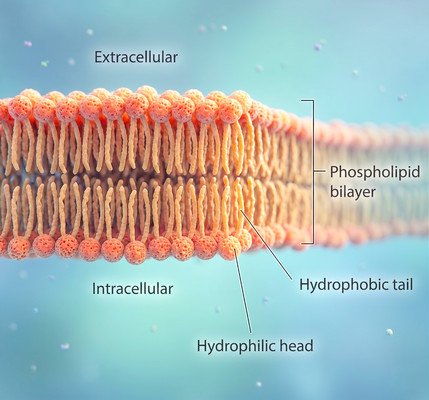
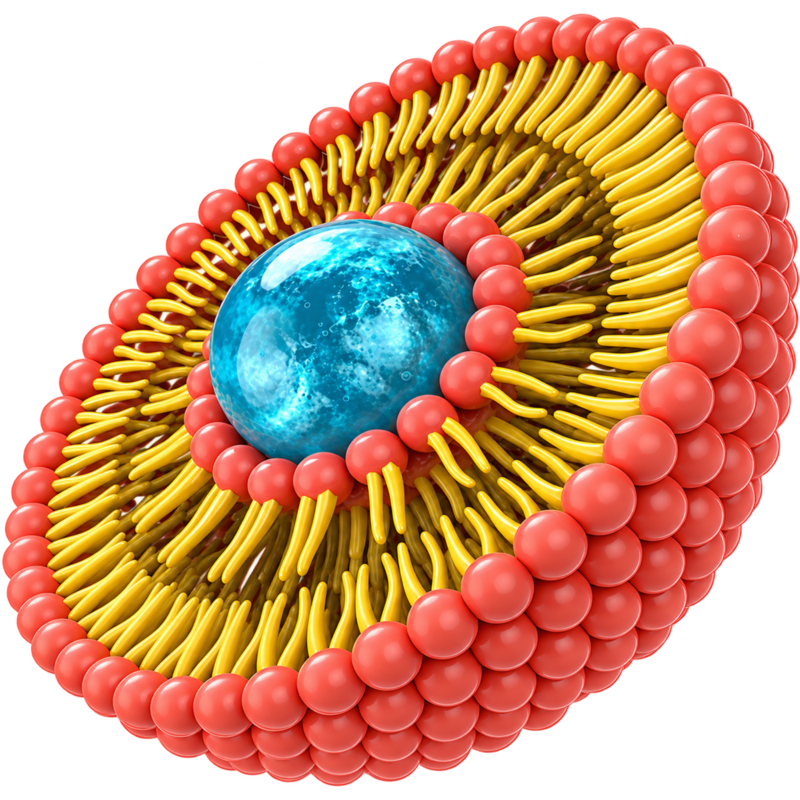
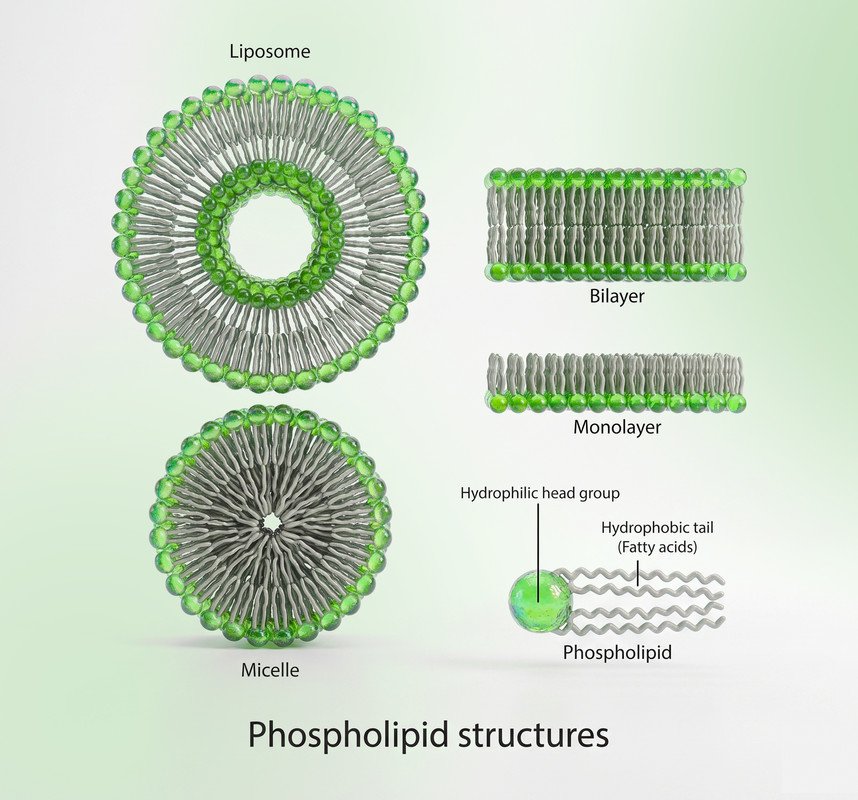
A liposome is a vesicle with a phospholipid bilayer that mirrors a natural cell membrane. This structure provides a stable environment for ingredients such as pharmaceuticals, nutraceuticals, and cosmeceuticals. Lipoedge’s liposomal formulations support precise API placement, greater stability, and superior passage across biological barriers.
Global Impact, Local Innovation
01

Prevalence of Liposomes

Distribution of Liposomal Studies

Explore the global journey of liposomal research and applications. Discover how innovation has advanced across the world over the decades.

Global Growth of Liposome Studies
Published studies worldwide by era
From 9K to 54K+ studies
Reflecting 6× growth in global research over the past decades.

Global Liposome Research Journey

Liposomal technology evolved through decades of global research, moving from membrane studies to regulated pharmaceutical, nutraceutical, cosmetic, and food applications worldwide.
1960S
Liposomal Studies Published
60+ YEARS
Scientific & Industrial Research
50+ COUNTRIES
Clinical & Commercial Adoption
Decades of Research
From membrane studies to advanced applications.
Scientific Advancement
Driving innovation in pharma, nutrition & more.
Global Reach
50+ countries contributing to liposome innovation.
Impacting Lives
Enhancing healthcare, wellness & sustainability.
Top Contributing Countries
By number of published liposome studies
Liposome Technology: Global Journey
Key milestones in the advancement of liposome technology worldwide.
1970s — Early Research
Initial liposome studies and formulation development.
1980s — Scientific Expansion
Increased research publications and global collaborations.
1990s — Industrial Integration
Liposomes enter pharma, cosmetics, and food industries.
2000s — Global Adoption
Widespread clinical applications and regulatory approvals.
2010s–Now — Innovation & Growth
Advanced nanomedicine applications and emerging markets.
Healthcare
Advancing healthcare with targeted drug delivery systems across therapeutic areas.
Technology
Driving innovation in nanomedicine, biotechnology, and precision therapeutics.
Global Impact
Improving lives through science, collaboration, and cross-border research partnerships.
Scientific History
02

The Journey of Liposomes

From Nature to Innovation

A timeline of key discoveries and breakthroughs that have shaped
liposomal science and its impact on the world.

Ancient Civilizations & Lipids
Early use of natural fats and oils for nutrition, healing, and preservation.
Historical Context: Ancient Egyptians, Greeks, and Romans applied animal fats and plant oils medicinally. These lipid-rich substances formed natural emulsions — early precursors to liposomal systems.
  • Lipid emulsions in Ayurvedic preparations
  • Olive oil used in Greco-Roman medicine
  • Beeswax-based ointments in ancient Egypt
1965 — Discovery of Liposomes
Alec Bangham discovered that phospholipids spontaneously form closed bilayer vesicles.
The Bangham Discovery: At the Babraham Institute, Alec Bangham observed that phospholipids in water self-assemble into spherical vesicles with bilayer membranes — strikingly similar to biological cell membranes.
  • Published in Journal of Molecular Biology
  • Demonstrated selective membrane permeability
  • Opened the entire field of membrane biophysics
1968 — Liposome Definition Coined
The term "liposome" was introduced, giving a precise identity to these lipid structures.
Naming the Discovery: The word "liposome" derives from the Greek lipos (fat) and soma (body). This formal nomenclature standardized scientific communication globally.
  • Enabled consistent scientific literature
  • Facilitated cross-disciplinary research
  • Spurred global pharmacologist interest
1974 — Drug Encapsulation Proven
Researchers proved liposomes can encapsulate and protect therapeutic molecules.
Therapeutic Potential Unlocked: Gregoriadis and colleagues demonstrated liposomes could encapsulate both hydrophilic and hydrophobic drugs, protecting them from degradation.
  • First enzyme encapsulation demonstrations
  • Proof of concept for drug delivery vehicles
  • Reduced toxicity in preclinical models
1987 — Gene Delivery Breakthrough
Liposomes emerged as powerful carriers for gene and nucleic acid delivery.
Lipofection Invented: Felgner et al. introduced cationic liposomes for efficient transfection of nucleic acids — directly paving the way for mRNA and gene therapy technologies.
  • Cationic lipid-DNA complexes (lipoplexes)
  • First efficient non-viral transfection method
  • Foundation for modern gene therapy
1995 — First FDA-Approved Liposomal Drug
Doxil® became the first liposomal drug approved by the FDA.
Doxil® — A Historic Milestone: PEGylated liposomal doxorubicin received FDA approval for Kaposi's sarcoma. PEG "stealth" coating dramatically extended circulation time.
  • Reduced cardiotoxicity vs. free doxorubicin
  • Enhanced permeability and retention effect
  • Landmark for liposomal nanomedicine
2020 — Lipid Delivery at Global Scale
Liposomal technologies power vaccines, biologics, and next-gen therapeutics worldwide.
mRNA Vaccines & Beyond: Lipid nanoparticles — descendants of liposomal technology — enabled rapid delivery of mRNA COVID-19 vaccines, vaccinating billions worldwide.
  • Pfizer-BioNTech & Moderna mRNA vaccines
  • Ionizable LNPs for efficient mRNA delivery
  • Applications in oncology & rare diseases
  • Over 5 billion doses delivered globally
Science & Innovation
03

Liposome's Entry In Modern Science

Advanced Nanotechnology
Meets Precision Delivery

Lipoedge's advanced biotechnology and nanotechnology techniques in liposomal delivery emerged as a precision lipid carrier at the nanoscale. Their ability to protect, transport, and release actives in a controlled manner positioned them at the intersection of modern drug delivery, nutrition science, and functional formulation design for private label manufacturing.

Nanoscale Lipid Carriers
Controlled Release
ISO Validated
Lipoedge laboratory scientist
GMP Certified Facility Pharmaceutical Grade
Lipoedge Knowledge Base
04

Frequently Asked Questions

01
What makes a liposomal formulation more effective than a standard formulation?

Lipoedge's world-class liposomal formulation protects the active compound within a phospholipid bilayer, reducing early degradation and improving its passage across biological barriers. This structure supports higher retention of the active, improved stability and more predictable delivery for oral, topical or parenteral use.

03
What are the key factors that define a stable liposome structure?

Stability depends on uniform vesicle size distribution, zeta potential, phospholipid composition and bilayer organisation. A well-balanced system avoids aggregation, prevents core leakage, and maintains structural form under heat, moisture, and pH variations.

05
What is the role of liposome technology in B2B product development?

Liposome technology provides precise delivery systems for brands that require higher stability, controlled release and stronger protection of sensitive actives. It supports development across nutraceuticals, pharmaceuticals and cosmeceuticals where improved performance and scientific validation are essential.

02
How do liposomes improve absorption and bioavailability?

Lipoedge's advanced liposomes merge with cell membranes, which supports closer interaction at the site of absorption. This reduces material loss in the gastrointestinal tract or on the skin surface and increases the fraction of the active that reaches the target zone.

04
What types of liposomes are commonly used in advanced delivery systems?

The most common structures include unilamellar vesicles (SUV, LUV), multilamellar vesicles (MLV) and deformable vesicles. Each type offers specific control over loading capacity, release behaviour and suitability for different delivery routes.